
In the name of Allah, the Most Gracious, the Most Merciful.
We, the Muslim Ulamma of Kenya, in our sacred duty as spiritual guides, moral compasses, and protectors of the social fabric of our communities, issue this solemn and urgent declaration on the grave crisis posed by the consumption and institutional promotion of Miraa (Khat) and other harmful substances. This declaration is born not out of political interest or economic agendas, but out of our unyielding commitment to safeguard the health, dignity, and moral integrity of the Ummah and the wider Kenyan society.
The Grave Consequences of Miraa and Substance Abuse
Miraa, widely known as Khat, is not merely a plant, it is a social toxin that has infiltrated homes, corrupted youth, shattered families, and eroded the foundation of moral values. For decades, our communities have witnessed a sharp rise in mental health disorders, declining productivity, school dropouts, and rising cases of depression and suicidal tendencies directly or indirectly linked to Miraa use. This is no coincidence. Scientific and social studies have consistently confirmed the dangers of Miraa, ranging from oral cancer and digestive disorders to insomnia, hallucinations, and severe addiction.
The youth, our future, our strength, have become the primary victims. In search of stimulation or peer validation, they fall prey to the deceptive allure of Miraa. Once ensnared, many spiral into lives of dependency, losing ambition, spiritual focus, and family connections. The ripple effects are visible: marriages collapse, children grow up neglected, and communities grapple with poverty and instability.
Compounding this crisis is the broader issue of substance abuse: alcohol, narcotics, and over-the-counter drugs, which are often abused with little regulation or oversight. These substances destroy not only the user but the very soul of a community, leading to crime, violence, and generational trauma.
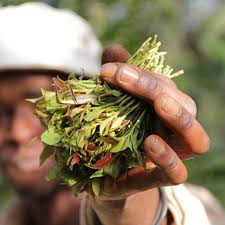
Government-Endorsed Tragedy: The Promotion of Miraa Trade
It is with deep concern and disappointment that we note the Kenyan Government’s continued support of the Miraa trade. Cloaked in economic rationalization, this endorsement is evident in national laws such as the Crops Act of 2013, where Miraa is classified as a cash crop under Sections 7 and 8. This classification effectively legitimizes and subsidizes the cultivation, trade, and consumption of a substance that has wreaked havoc across Kenyan households.
Further strengthening this support is the Agriculture and Food Authority (AFA) Act, also enacted in 2013, which facilitates the regulation and export of Miraa. Under these policies, state resources, funds that could have gone toward healthcare, education, or youth empowerment, are being channeled into an industry that is fundamentally destructive. Moreover, Kenya’s diplomatic efforts to lobby for Miraa’s acceptance in global markets signal a dangerous normalization of substance use.
This governmental prioritization of economic gain over social health is not only short-sighted; it is deeply unethical. While jobs and income are important, they must never come at the cost of human dignity, morality, and life itself. No nation can prosper while it is spiritually and socially hollowed out from within.
Violation of Constitutional Mandates
The continued support for Miraa trade not only defies moral logic but also violates the supreme law of the land, the Constitution of Kenya. Several key articles are being blatantly undermined:
- Article 43(1)(a) guarantees every Kenyan the right to the highest attainable standard of health. Encouraging the cultivation and use of a substance proven to be harmful is a direct breach of this constitutional right.
- Article 53(2) underscores the paramount importance of a child’s best interests in every decision. Miraa, which leads many youth to addiction, idleness, and despair, clearly runs contrary to this obligation.
- Article 21(2) compels the State to take legislative and other measures to ensure that all Kenyans, especially the vulnerable, can realize their rights. Promoting Miraa is a betrayal of this duty, endangering the very citizens the State is meant to protect.
The government cannot hide behind legislative frameworks while simultaneously enabling policies that contradict the Constitution. Laws must evolve with the moral and health needs of the people.
Our Irrevocable Position
In light of these realities, social devastation, state complicity, and constitutional breaches, we, the Muslim Ulamma of Kenya, cannot and will not remain silent. Our faith, our conscience, and our accountability before Allah (SWT) compel us to take a firm, uncompromising stance.
We therefore declare:
- The institutional promotion of Miraa and other substances by the Kenyan government is morally reprehensible, socially destructive, and constitutionally indefensible.
- No economic benefit, however tempting, can justify the degradation of communities, the destruction of youth, and the moral decay spreading across the nation.
- The government’s continued support for Miraa trade is a betrayal of its duty to protect and uplift its citizens.

Our Call to Action
Guided by the teachings of Islam and the universal principles of justice, health, and social welfare, we announce the following steps:
- Nationwide Campaign for Eradication:
We will spearhead a robust, sustained campaign to educate communities about the dangers of Miraa and substance abuse. This will involve sermons in mosques, workshops, school outreach programs, and collaborations with medical professionals, educators, and civil society. We aim to reach every corner of the nation, from urban centers to rural villages, arming our people with knowledge and spiritual strength. - Policy Reformation and Advocacy:
We demand that the Kenyan government cease all financial and legislative support for Miraa trade. The Crops Act and AFA Act must be repealed or substantially amended to reflect the social and health priorities of the people, not economic expediency. The government must demonstrate that it values life, health, and morality above temporary economic gains. - Economic Transition Support:
We recognize that many families and communities rely on the Miraa trade for income. Therefore, we urge the State to provide comprehensive transition packages: training programs, agricultural subsidies for alternative crops, business development funds, and access to new markets. No community should suffer during this transition. With thoughtful planning, economic transformation is possible without moral compromise. - Enforcement and Rehabilitation:
We call for the strict enforcement of existing laws against illegal drug trafficking and substance abuse. In addition, we advocate for increased investment in rehabilitation centers, counseling services, and reintegration programs to support those already ensnared by addiction. Compassion and accountability must go hand in hand.
The Role of Religious and Community Leadership
As religious scholars, our responsibility goes beyond preaching in mosques or leading prayers. We are the heartbeat of our communities, and our influence stretches across every sphere of life, spiritual, social, and ethical. The battle against Miraa and substance abuse cannot be won through laws and policies alone; it requires a united moral front driven by trusted community voices.
We, the Muslim Ulamma, commit ourselves to being at the forefront of this moral movement. Our mosques will not only be places of worship but also centers of education and rehabilitation. Every Khutbah (Friday sermon), every madrasa class, every youth gathering will echo the message of sobriety, dignity, and personal responsibility. We will integrate teachings from the Qur’an and Sunnah that highlight the dangers of intoxication, idleness, and the wasting of life on harmful pursuits.
Beyond the mosques, we will engage community elders, women’s groups, youth organizations, and educational institutions to create a multi-layered approach to awareness. We recognize that substance abuse is often rooted in deep psychological, social, and economic struggles. Our approach must be compassionate, holistic, and community-driven. We must give people alternatives, spiritually fulfilling, economically viable, and socially supportive.
Youth Empowerment and Moral Revival
It is our youth who are most at risk, and yet, it is they who hold the greatest potential to lead Kenya into a brighter future. The current crisis must be a wake-up call for all of us. Miraa and other substances are not just chemical addictions; they are symptoms of deeper issues, unemployment, peer pressure, broken homes, and spiritual emptiness.
We are failing our youth when we allow them to idle in towns, chewing Miraa into the late hours of the night, with no guidance or purpose. We must replace despair with direction. This starts with empowering our youth through faith, education, mentorship, and economic opportunity.
We will launch youth-focused programs that provide:
- Spiritual guidance: Regular sessions on Islamic values, purpose, and self-worth.
- Skill-building: Training in agriculture, technology, entrepreneurship, and creative arts.
- Mentorship: Pairing youth with positive role models in their communities.
- Sports and recreation: Establishing healthy outlets to combat boredom and peer pressure.
This holistic approach will nurture young people who are spiritually grounded, economically productive, and socially responsible.
Partnership with Civil Society and Other Faith Communities
Though this declaration is rooted in our Islamic faith, the issue we confront transcends religion. Miraa and substance abuse affect Christians, Muslims, and people of all faiths and backgrounds. Therefore, we extend a hand of collaboration to churches, civil society groups, NGOs, and other faith-based organizations.
Together, we can build a united national movement that prioritizes human dignity over short-term profits. This is not a Muslim issue; this is a Kenyan issue. Let us work side by side to advocate for policy changes, support addiction recovery, and rebuild the moral foundations of our nation.
We will hold joint forums, share resources, and coordinate campaigns. Our diversity is our strength, and our shared values of compassion, justice, and human welfare must guide this mission.
Accountability and Government Responsibility
It is not enough to issue declarations or make passionate speeches. As religious leaders, we commit to holding those in power accountable, consistently and firmly. The government of Kenya must face the moral and constitutional contradictions inherent in its current stance.
We call upon the Ministry of Health, the Ministry of Agriculture, the Ministry of Education, and the Judiciary to re-examine their roles in either enabling or combating the Miraa crisis. Every branch of government has a responsibility to serve and protect the Kenyan people.
We also urge Members of Parliament and Senators to revisit and revise existing legislation. Laws must reflect the evolving needs and realities of society. They must be life-affirming, not life-destroying.
We will not allow political convenience or economic greed to silence our voices. We will continue to advocate, to educate, and to mobilize until justice is done and lives are saved.
Conclusion
Our declaration is not one of condemnation, but of compassion. It is born from pain, but also from hope. We believe in the power of change, the strength of faith, and the resilience of our people. Kenya does not have to be defined by addiction, moral decay, or lost generations. A better future is possible, but only if we act now, together.
We call on all Muslims, all Kenyans, young and old, religious and secular, to join us in this sacred mission. Let us reclaim our youth, restore our families, and rebuild our communities on the firm foundation of health, morality, and spiritual purpose.
May Allah (SWT) grant us the strength, unity, and wisdom to carry out this noble endeavor.
FAQs
- Why is the Muslim Ulamma of Kenya focusing on Miraa and not other social issues?
While there are many pressing concerns, Miraa represents a unique and urgent crisis due to its widespread abuse, state endorsement, and devastating impact on youth. Addressing it lays the groundwork for tackling broader societal problems. - Isn’t Miraa legal in Kenya? Why oppose it now?
Yes, Miraa is legal under current legislation, but legality does not equate to morality or social benefit. The legal framework must be challenged when it leads to the deterioration of societal health and moral values. - What will happen to those who depend on the Miraa trade?
We advocate for a structured transition, with government support for alternative livelihoods, training, and economic empowerment programs to ensure no community is left behind. - How can local communities support this movement?
Communities can support by rejecting the normalization of substance use, engaging in public education, supporting youth programs, and demanding policy changes from elected leaders. - Is this campaign only for Muslims?
Absolutely not. This campaign is inclusive and seeks the participation of all Kenyans, regardless of religion, because substance abuse is a national crisis that affects everyone.
Interesting post, the UK banned khat in 2014, classifying it as a Class C drug due to health and social concerns. It was linked to anxiety, insomnia, and long-term health risks, while also contributing to family breakdown and social isolation in some communities, particularly among the Somali diaspora.
Beyond the health risks, the government highlighted social issues in some communities, where khat was blamed for family breakdown, financial hardship, and social isolation. Community leaders had raised concerns that excessive use led people to neglect family responsibilities, lose jobs, and withdraw from wider society.
There was also an international dimension. Many European and North American countries had already banned khat, which raised fears the UK was being used as a hub to traffic it to places where it was illegal. Police were also concerned about organised crime networks profiting from this trade.