
One day, a boy approached his father and asked, “What is my life worth?”
The father handed his son a small, ordinary stone and said, “Take this stone to the market. If anyone asks the price, just raise two fingers and don’t say a word.”
The boy did as he was told. An old woman at the market saw the stone and wanted it for her garden. “How much is that rock?” she asked. The boy held up two fingers, and the woman replied, “$2? I’ll take it!”
Before she could buy it, the boy turned and ran home to tell his father what had happened.
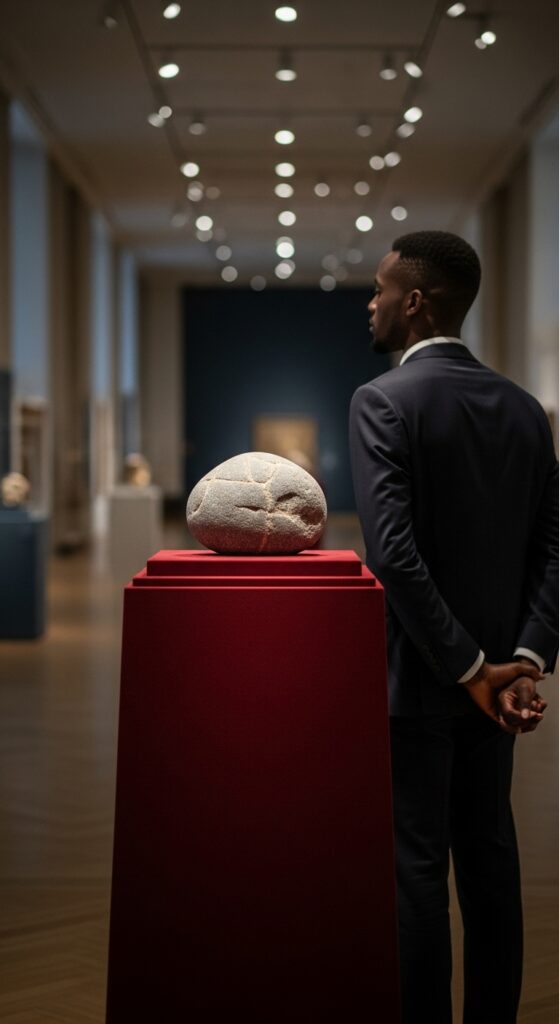
His father nodded and said, “Okay, now take the stone to the museum. If anyone asks the price, raise two fingers and don’t say anything.”
At the museum, a man in a suit approached the boy. “How much is that stone?” he asked. The boy held up two fingers, and the man replied, “$200? I’ll take it!”
The boy was amazed and rushed home to tell his father the news.
His father smiled and said, “Now, take the stone to the precious gem store. If the owner asks the price, raise two fingers and don’t say anything.”
The boy went to the store, and the owner immediately noticed the stone. “Where did you find that rare stone?” he exclaimed. “I’ve been looking for one like this my whole life! How much will you sell it for?”
The boy held up two fingers, and the man’s eyes widened. “$20,000? I’ll take it!”
Once again, the boy turned and ran home, speechless with excitement.
Moral of the Story
The lesson here is a profound one: Your worth is not a fixed price tag, but a value you determine for yourself. You decide what you want to be and set your goals.
The Power of Environment
The most immediate lesson is about environment. The stone itself never changed. It was the same rock in all three different places. What changed was the context. In the market, it was just a common stone for a garden. In the museum, it was a piece of art or history. In the gem store, it was a rare and precious find.
This is a direct parallel to our own lives. The same person might be considered an “average employee” in a company that doesn’t value their skills, but a “star performer” at a different company that actively uses and rewards those same skills. Your creative ideas might be dismissed as “weird” in one group of friends, but celebrated as “brilliant” in another. This shows us that our surroundings can either limit our potential or unlock it.
The Role of People
Beyond just the physical place, the people we surround ourselves with are a crucial part of our “environment.” Think about the boy in the story:
- The old woman saw a practical item for a low price.
- The man in the suit saw an aesthetic object with some value.
- The gem store owner saw a rare treasure he had been searching for.
Each person valued the stone differently based on their own knowledge, needs, and perspective. The same is true for us. Some people in our lives may only see us for what we can offer them at a low cost—whether it’s our time, our energy, or our skills. Others might appreciate us more, but still not see our full potential.
The most valuable people in our lives are those who, like the gem store owner, are actively seeking what we have to offer. They recognize our unique qualities and see our true worth. Surrounding ourselves with people who support our growth and value our strengths can transform our lives.

You Control Your Own Worth
Ultimately, the story places the power directly in your hands. The boy didn’t haggle with the old woman or the man in the suit. He simply understood that if the environment wasn’t right, he could move on.
This is the most empowering part of the lesson. You are not a victim of your circumstances. You have the agency to:
- Change your location: If your job doesn’t appreciate your talents, you can look for one that does.
- Change your social circle: If your friends are holding you back, you can seek out new connections that encourage you to grow.
- Change your mindset: You can decide not to accept the low-value price tag someone else has placed on you. You can choose to see your own worth, even if others don’t.
The story isn’t saying that you will always find a “gem store” where you are valued at your highest. Walk away from where you’re not value. It is the realization that you have worth, you have dignity and you have value. Don’t lower your youth or measure to other people’s standards. But it is a powerful reminder that you have the right and the ability to seek out places and people that see your true value, rather than settling for an environment that leaves you feeling small.