
A story is told of someone who left a water bottle open over night. By morning, something in the bottle changed how his view of the world.
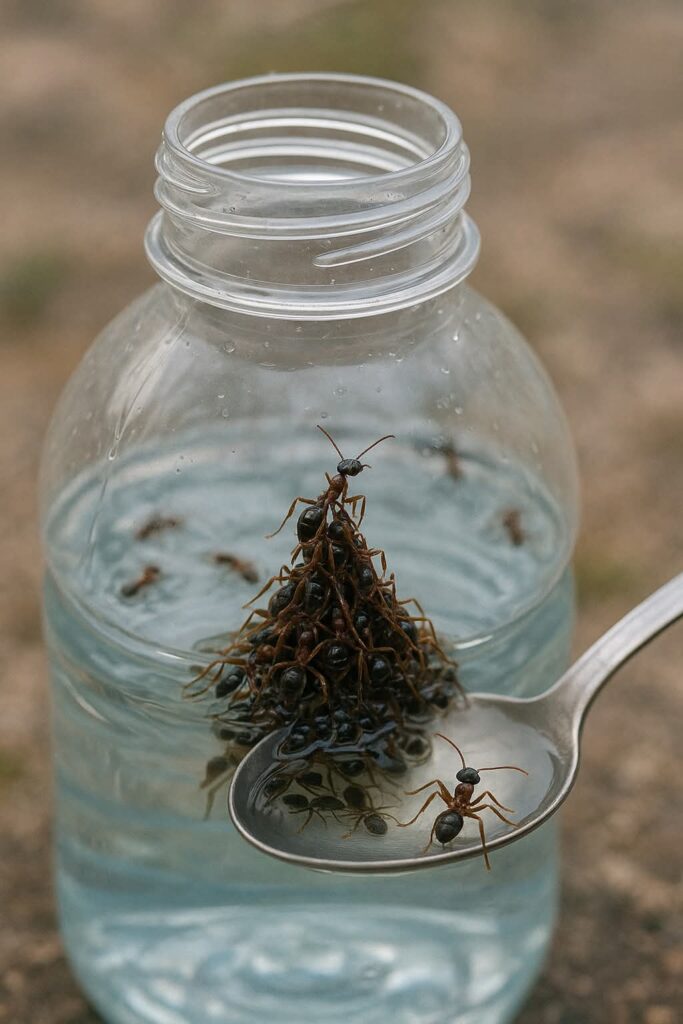
Inside were ants, dozens of them. Tiny creatures flailing on the water’s surface, their legs trembling, their bodies barely afloat, like shipwrecked souls clinging to each other in the silence of crisis.
And at first glance, shamefully, he admitted, he misunderstood them.
They looked like they were drowning each other.
The Assumption of Selfishness
He recoiled. Walked away, even. told himself it was too late. That they’d turned on each other. That survival was selfish, and maybe that’s all there was to life. That when faced with danger, each creature, each human, each soul fights only for itself.
It disturbed him. Not because they were ants, but because he saw us in them.
In that moment, he saw crowded refugee boats, saw economic systems where one person’s success is built on another’s ruin. He saw the chaos in our politics, our communities, our families, where so often, we climb by stepping on others. He felt an uncomfortable mirror staring back at him. Was this us? Was this me?
But something in him, a whisper of curiosity or maybe guilt, pulled him back a few hours later. He peeked into the bottle, expecting death.
Instead, he found life.
The Myth of Climbing Alone
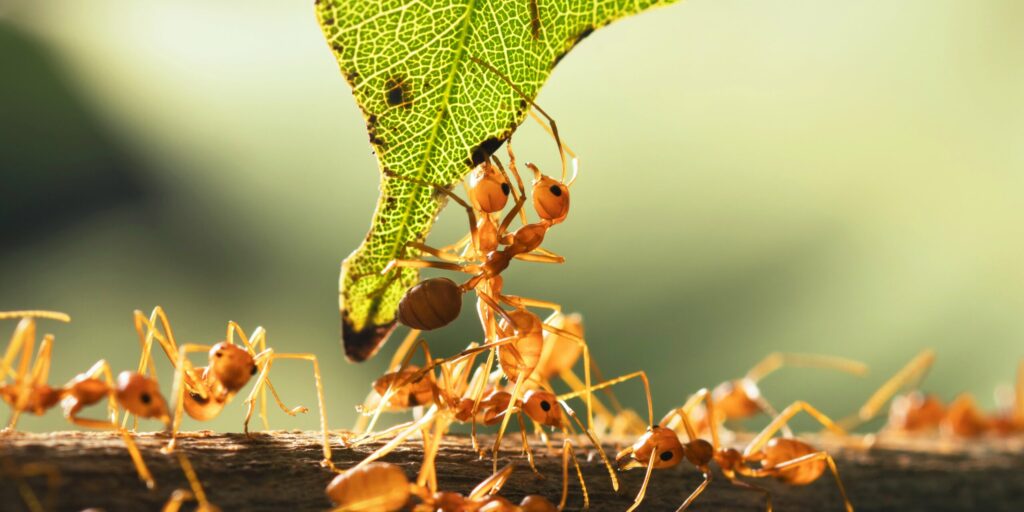
The ants were alive. Not only that, they were working together.
They hadn’t pushed each other down. They were lifting each other up.
They had formed a living pyramid. The strongest stood below, holding up the weak. Then, gracefully, without panic or pride, they rotated. The ones who held up others were, in turn, lifted. There was no scramble, no fight, no selfish clawing to the top. Just order. Unity. Dignity.
No ant left behind.

He stood frozen. Humbled.

Because in that water bottle, he witnessed something we humans write about in books, quote in speeches, preach from pulpits, but so rarely practice.

He saw community.
The Spoon of Mercy
He could not just stand there aanymore. He ran to the kitchen, grabbed a spoon, and carefully dipped it into the bottle. He was slow, clumsy, enormous compared to them. But they didn’t scatter. One by one, they climbed aboard. Without confusion. Without hesitation.
It was as if they knew, together, this was their way out.
Every time he lifted the spoon, he felt a strange sense of duty, like he wasn’t rescuing them, but bearing witness to something sacred.
Then, just as he was about to free the last one, he slipped. Fell back into the water. He was alone now.
But not for long.
One ant, already safe, turned around. Without thought. Without ceremony. He dove back into the water.
He didn’t float. He embraced the fallen.
No One Gets Left Behind
That single moment, more than any book he has ever read or any lecture he has ever delivered, taught him the essence of what it means to be human.
To risk your safety for someone else’s survival.
To understand that strength isn’t just getting out of the bottle, it’s going back in when someone else falls.
So often in life, we reach the shore and forget about the sea we swam through. We build ladders and cut them once we’re at the top. We create institutions, economies, and systems that reward success, but seldom recognize the silent, trembling hands that held us as we rose.
We mistake independence for superiority. We idolize the “self-made,” the “lone survivor,” the “rugged individual.”
But what if the real heroes are those who choose the hardest places, just to hold others up?
Learning from the Ant
It’s a strange thing, isn’t it? How a creature we crush beneath our feet, brush off our tables, drown in our sinks, can be more noble than us.
But these ants reminded us of something profound:
Dignity isn’t in domination. It’s in compassion.
Courage isn’t climbing out, it’s diving back in.
Strength isn’t in saving yourself, it’s in saving each other.
He realized I had gotten it all wrong.
And maybe we, as a society, have too.
We talk about progress, but if that progress leaves others behind, what is it really? We talk about power, but if that power doesn’t protect the weak, what is it worth?
We often say, “It’s every man for himself.”
But maybe the ants are whispering a different truth:
“It’s everyone for each other.”
The World Through Ant Eyes
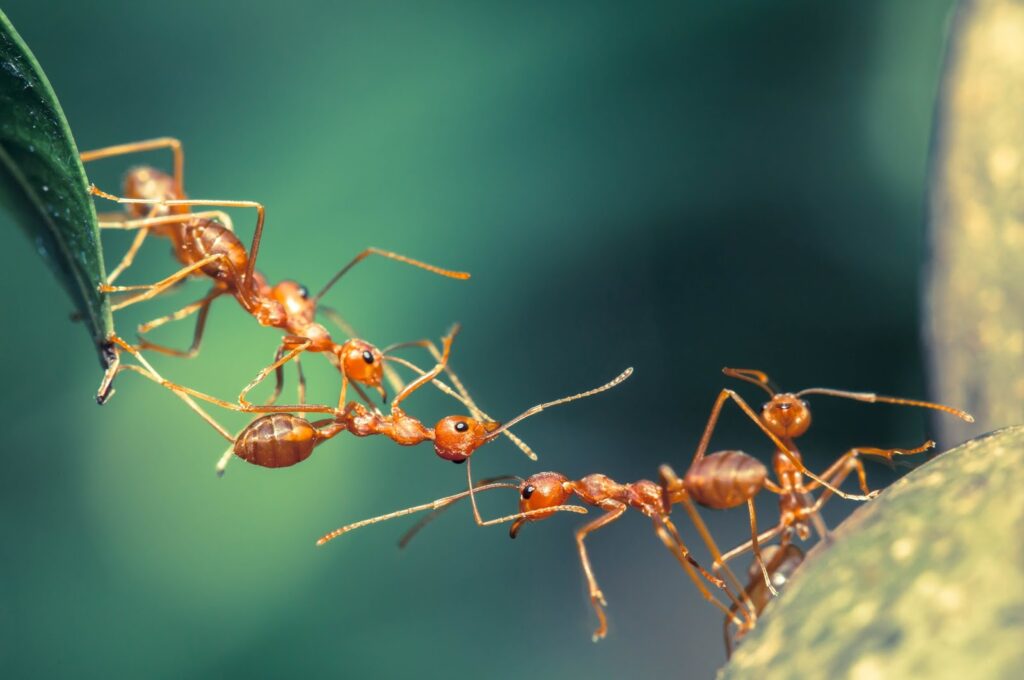
“That morning, I didn’t just watch ants, I witnessed a philosophy of life. A quiet, ancient wisdom embedded in those tiny creatures who weigh nothing yet carry everything.
I wondered, what would our world look like if we saw through ant eyes” ?
Dr Mohamed Abdinoor’s Perspective.
If CEOs remembered the janitors. If doctors remembered the nurses. If we all remembered the hands that once pulled us up when we were sinking.
What if every community operated like that ant colony in the bottle, rotating, lifting, supporting without ego or reward?
What if we taught our children that greatness isn’t measured by how many people look up to you, but how many people you’re willing to lift?
The Culture of Climbing Alone
We live in a culture obsessed with individual success. We idolize the lone wolf, the self-made millionaire, the singular genius. We cheer for the one who makes it out, but rarely ask, “Who did they leave behind?”
From classrooms to corporate offices, we reward competition over collaboration. “Survival of the fittest” has been distorted into “forget the rest.”
We compete for limited seats at the table, never questioning why the table is so small.
But those ants? They had one goal: get everyone out.
They didn’t need applause. They didn’t need recognition. Their unity was silent, instinctive, and pure.
And that, more than any motivational poster or leadership seminar, is what leadership really is.
The Power of Small Gestures
You know what hit me hardest? It wasn’t just the ants’ strength. It was the tenderness.
One ant turned back. One. And that changed everything.
He didn’t hesitate. He didn’t calculate risk. He didn’t wait for orders. He saw another in need and moved.
How often do we hesitate to help?
We scroll past suffering. We walk past pain. We tell ourselves “someone else will step in.” We weigh the cost before the compassion.
But in that moment, a creature with a brain the size of a grain of sand put my entire moral compass on trial.
If an ant can do that… why can’t we?
Rewriting Our Human Code
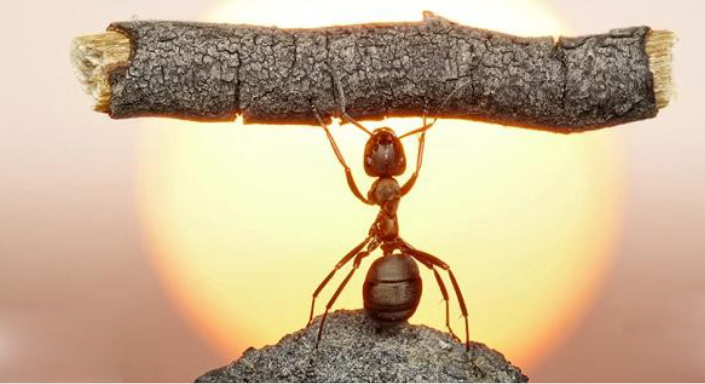
Maybe it’s time to rewrite the script.
What if success was defined not by how far you climb, but by how many you bring with you?
What if we measured the health of a society not by its billionaires, but by how it treats the broken, the fallen, the forgotten?
The ants didn’t have religion. They didn’t need policies or committees or mission statements.
They had each other.
And somehow, in their smallness, they revealed the largeness of life.
The Invitation to Be More Human
That day, I didn’t save the ants. They saved me.
They saved a part of me I didn’t know had drowned, a part weary from the world’s selfishness, cynical about people, exhausted from watching the strong trample the weak.
They reminded me that love isn’t loud. Courage doesn’t always roar. And real strength… is humble.
So today, I invite you:
Be the one who goes back.
Be the spoon in someone’s storm.
Be the ant that lifts, not the one that climbs.
Because when we lift others, we all rise. When we remember those left behind, we all find our way forward. When we live with the heart of an ant, we become something more than human.
We become humanity.
From Bottles to Boardrooms: Where We Need the Ant Mentality
Let’s be honest, our world is a bottle.
Some are trapped at the bottom, treading water. Others are halfway out, clinging to anything they can. A few have made it to the top and walked away, forgetting the panic, the fear, the chaos they once knew.
In our homes, our workplaces, our schools, and our governments, the bottle is real.
It’s the single mother juggling three jobs and still falling behind. It’s the refugee lost between borders. It’s the elderly left behind by a digital world. It’s the young boy who never gets picked for the team, the girl too anxious to speak in class, the man who sits alone at the office party.
And meanwhile, we’re all standing around with spoons in hand.
The question is, will we use them?
The Spoon as a Symbol
That spoon. It wasn’t just a kitchen utensil. It became something sacred. It represented action. Compassion. Intervention.
A spoon doesn’t seem powerful. It doesn’t roar or march or tweet. But that morning, in my hand, it saved lives.
We don’t always need grand gestures. We don’t need million-dollar donations or trending hashtags to make a difference. Sometimes, what the world needs most is a simple spoon, an act of grace, a small step toward kindness, a reminder that someone still cares.
A ride offered. A hand extended. A job recommended. A door held open. A voice that says, “I see you.”
That’s the spoon.
And when we choose to use it, we become part of something extraordinary.
Breaking the Illusion of “The Other”
Why do we often fail to help? Because we see “them” as different.
They’re not “my problem.” They’re “not like me.”
We draw lines. We label. We separate.
But in the bottle, the ants didn’t say, “You’re not my type of ant.”
They didn’t care who was stronger, or smarter, or faster. They moved together, like a single body, a single spirit.
We could learn something from that unity.
Because the truth is, we are all ants.
Small. Fragile. Temporary.
No matter your title or your salary or your passport, you’re just one breath away from needing help.
And when that moment comes, when you fall back into the water, what will matter most is who turns back for you.
Leaving No One Behind: A New Ethic
I think about that last ant a lot.
He was free. He had made it. He could’ve walked away, never looked back, never known what happened to the one who slipped.
But he turned back.
He dove in. Not out of obligation. Not out of logic. But out of love.
And maybe that’s the ethic we need to reclaim.
Not charity. Not pity. Not duty.
But love.
A love that doesn’t count the cost.
A love that doesn’t clock in and out.
A love that says, “If you’re still in the water, then I haven’t finished climbing.”
The Final Climb: Becoming Like the Ant
When I lifted that last ant out of the water, I realized something else.
He didn’t celebrate. He didn’t pause.
He simply rejoined the group, and they walked away together.
No parades. No speeches. Just unity.
In that moment, I understood:
We were never meant to rise alone.
We were meant to climb together.
And if the tiniest among us can model such strength, compassion, and coordination, what excuse do we have?
Maybe it’s time we stopped building empires and started building ladders.
Maybe it’s time we stopped asking, “What’s in it for me?” and started asking, “Who needs me?”
Maybe it’s time we stopped trying to be great, and started trying to be good.
Conclusion: From Ant Hills to Heaven
I don’t know what ants believe in. But I do know this:
That morning, in that bottle, I saw heaven.
Not the kind with clouds and choirs, but the kind where no one is alone. Where every hand reaches down. Where dignity lives not in dominance, but in humility. Where greatness is measured by how low you’re willing to go, to lift someone up.
If we want a better world, maybe we start by thinking smaller.
By learning from those we ignore.
By becoming more like the ant.
Because the greatest rescue I witnessed wasn’t a miracle.
It was a choice.
A choice to turn back.
A choice to climb together.
A choice to love, even when it’s easier to leave.
And if a creature with no voice, no pride, and no applause can do that, what’s stopping us?
FAQs
- What inspired Dr. Mohamed Abdinoor Dahir to write this article?
A simple encounter with ants trapped in a water bottle sparked deep reflection about human nature, compassion, and unity. What started as a mundane moment turned into a profound life lesson. - What is the main message of this article?
The core message is about the power of togetherness. True strength lies not in climbing alone, but in lifting others as we rise and returning for those who fall behind. - How can we apply the lessons of the ants to real life?
Start small. Help a friend, support a colleague, lift a neighbor. Choose kindness over competition. Make unity a daily habit. And remember, it’s the small gestures that often have the biggest impact. - Why did the author focus on the imagery of the spoon?
The spoon symbolizes the tools we all have to help others. It reminds us that simple actions, taken with intention and care, can change lives, even save them. - What can we learn from the last ant that turned back?
That real love is selfless. That true courage isn’t just about escaping danger; it’s about returning to help those still in it. That we’re never truly free until everyone is.
A very educative article that inspires us to serve humanity 💯 percent without waiting others to do so or expecting anything back by doing so
An inspiring and insightful read. Your ability to connect simple lessons from nature to human life is remarkable.
Wow..!!
This is deep
This brings clarity in our day to day lives.
Now I see ants differently life lessons through nature’s eye, who would have thought.
Strength and winning in togetherness!!
Awesome article Prof.